Know Your Place: Emrack Brings WMS-Ready Location Labelling to CSR's Yarraville DC
A Big Site With a Lot to Find
Yarraville is one of CSR's most important Victorian operations. It's the home of Gyprock plasterboard manufacturing in the state and a major distribution hub, supplying a catchment that stretches across Victoria, Tasmania, South Australia and southern NSW. CSR's $168 million redevelopment of the site more than doubled its on-site warehousing to over 22,000 m², bringing previously off-site storage under one roof. CSR is now part of the global Saint-Gobain group.
A site that size runs on more than one kind of racking. Yarraville stores stock in selective pallet racking, drive-in racking, cantilever racking, A-frame racking and shelving — each with its own layout, level heights and way of being picked.
That's where a warehouse management system earns its keep, and where it can fall over. A WMS is only as good as the locations it scans. If the labels on the racking don't match the system, or one area is numbered differently to the next, stock goes missing on paper even when it's sitting right there on the beam.
One Location Scheme Across Five Racking Systems
Emrack took the project from location plan through to finished labels on site:
Consultation & Design
We reviewed each racking area and worked out a numbering scheme that would hold together across very different systems — from pallet beams and drive-in lanes to cantilever arms and A-frame bays — while matching the location data in CSR's WMS. Every location label carries a scannable code, so the address on the steel and the address in the system are one and the same.
Artwork & Approval
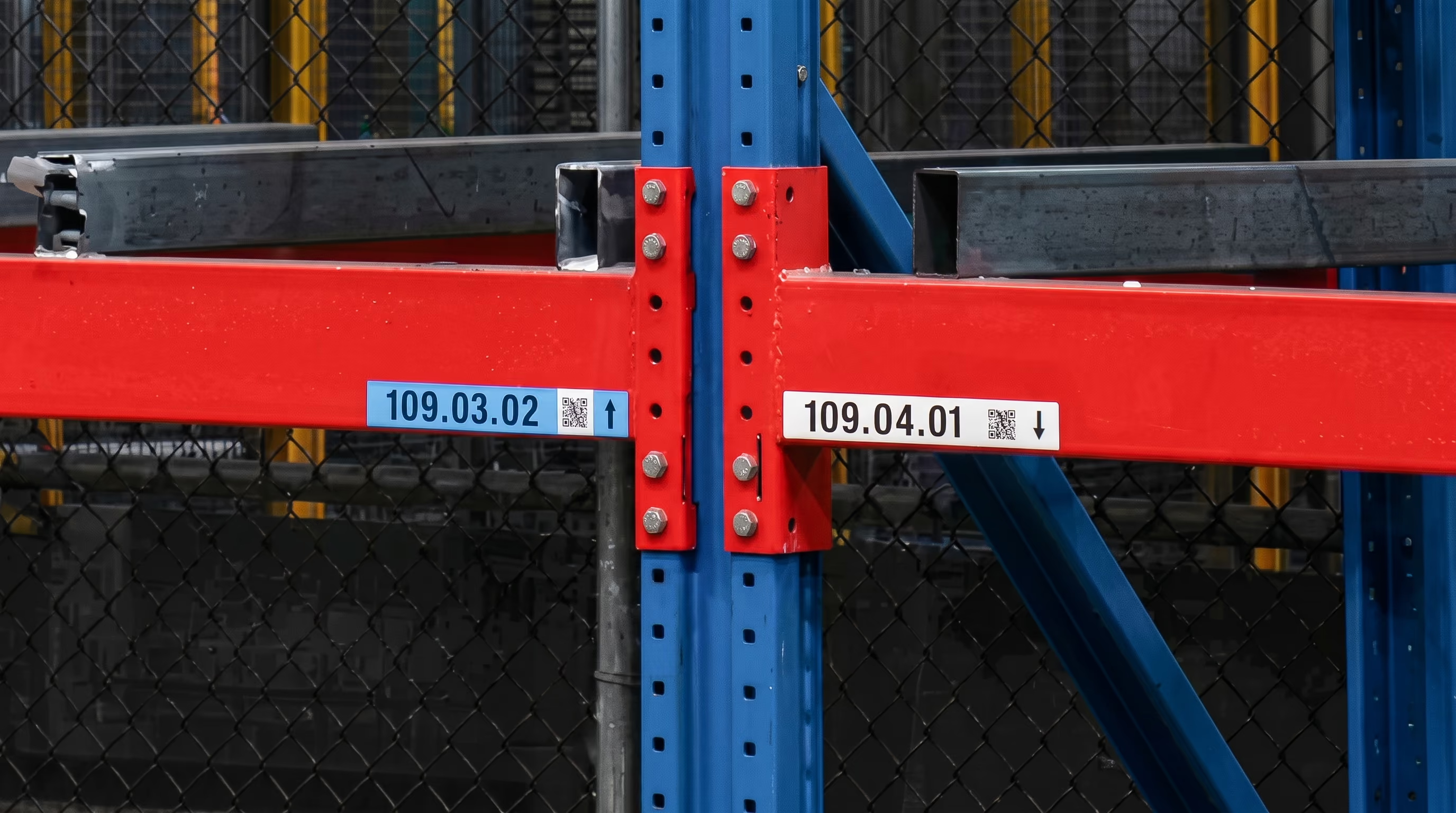
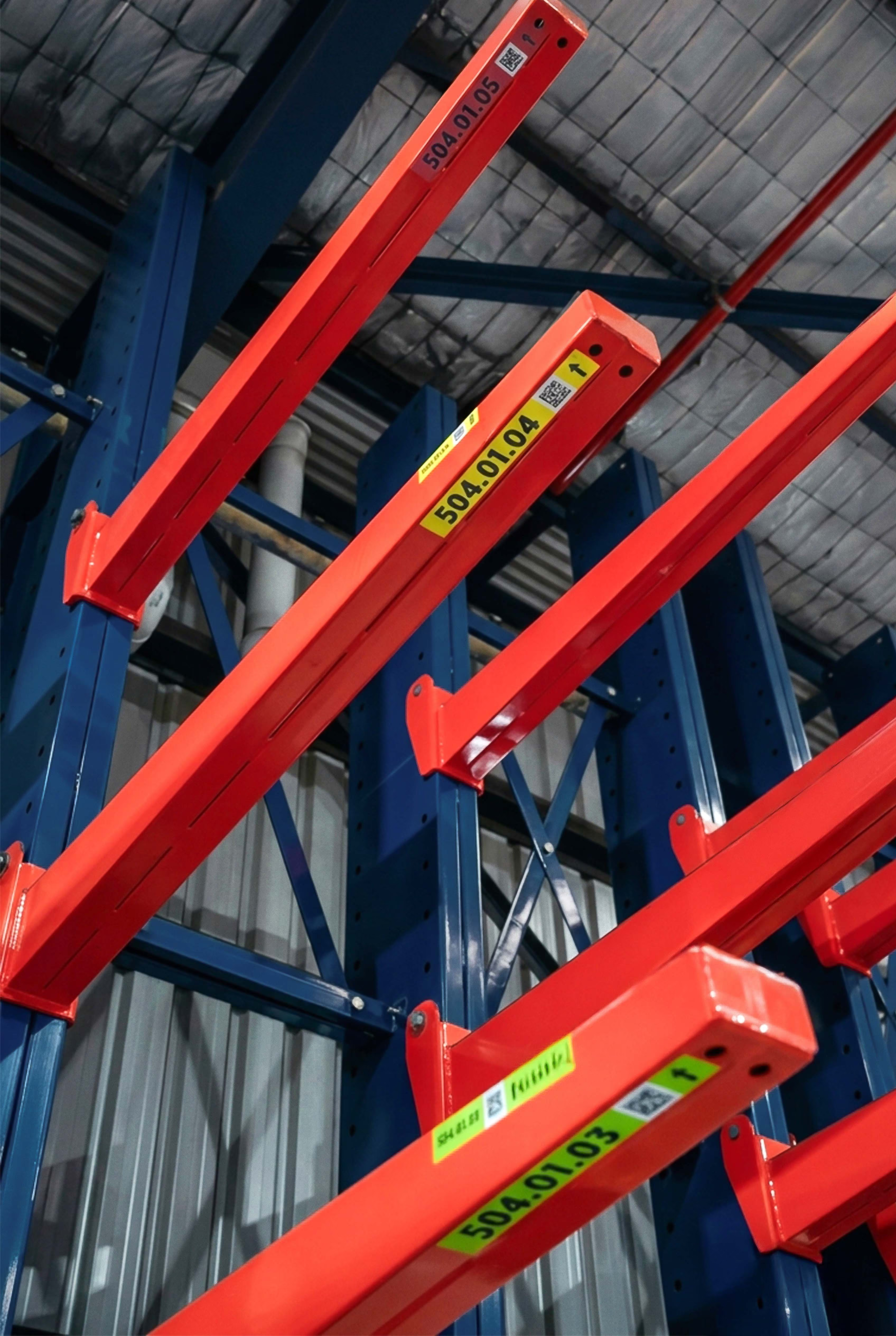
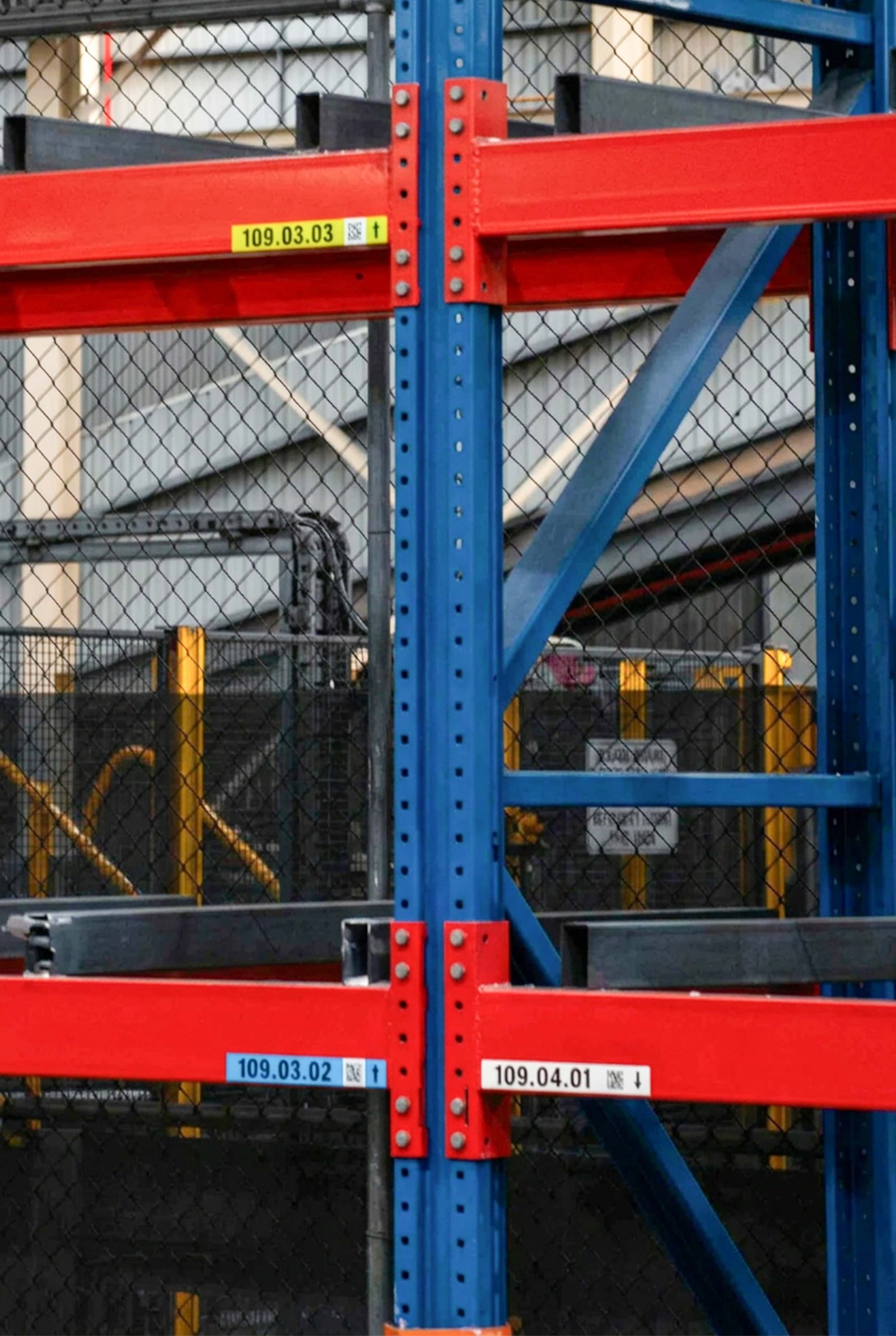
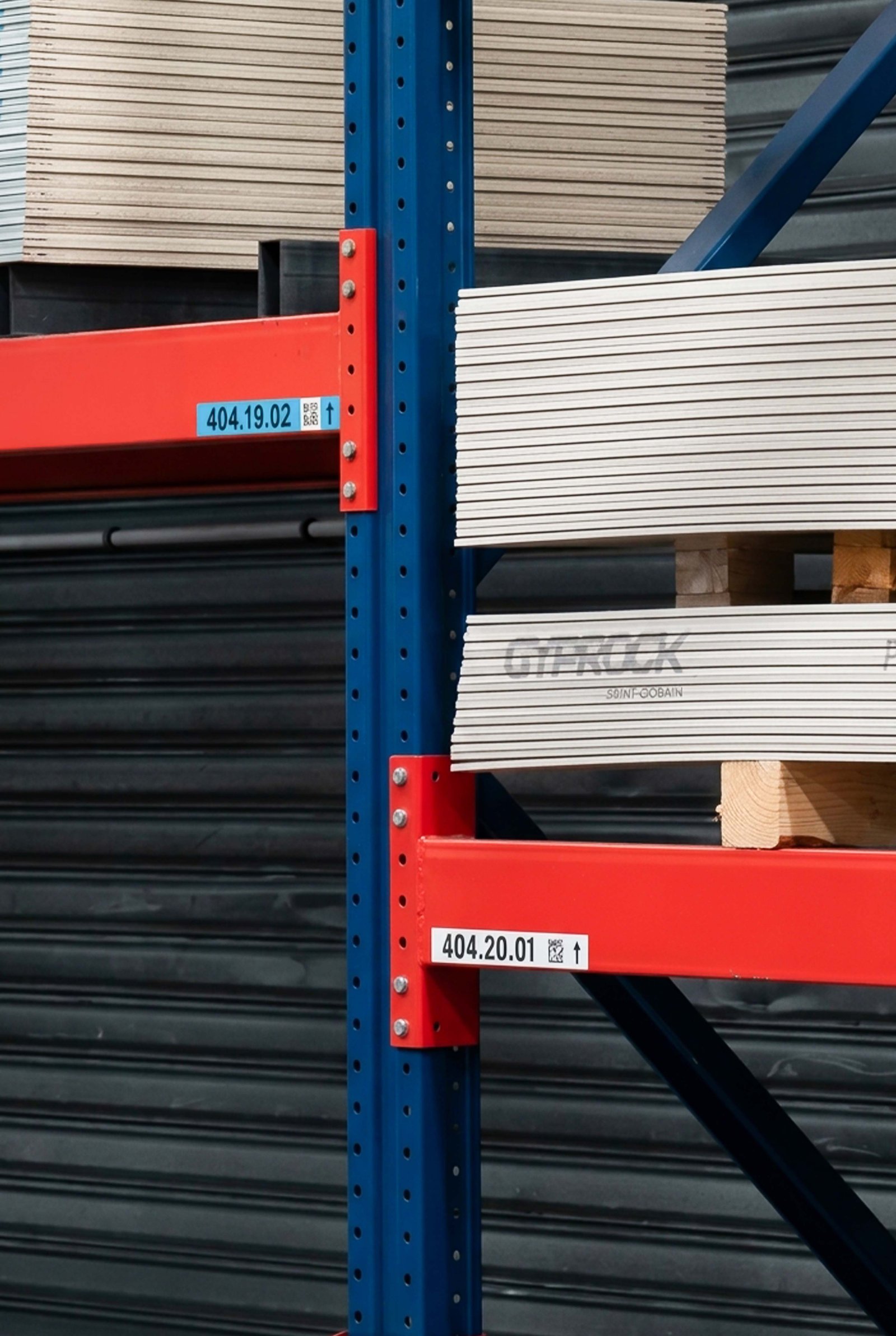
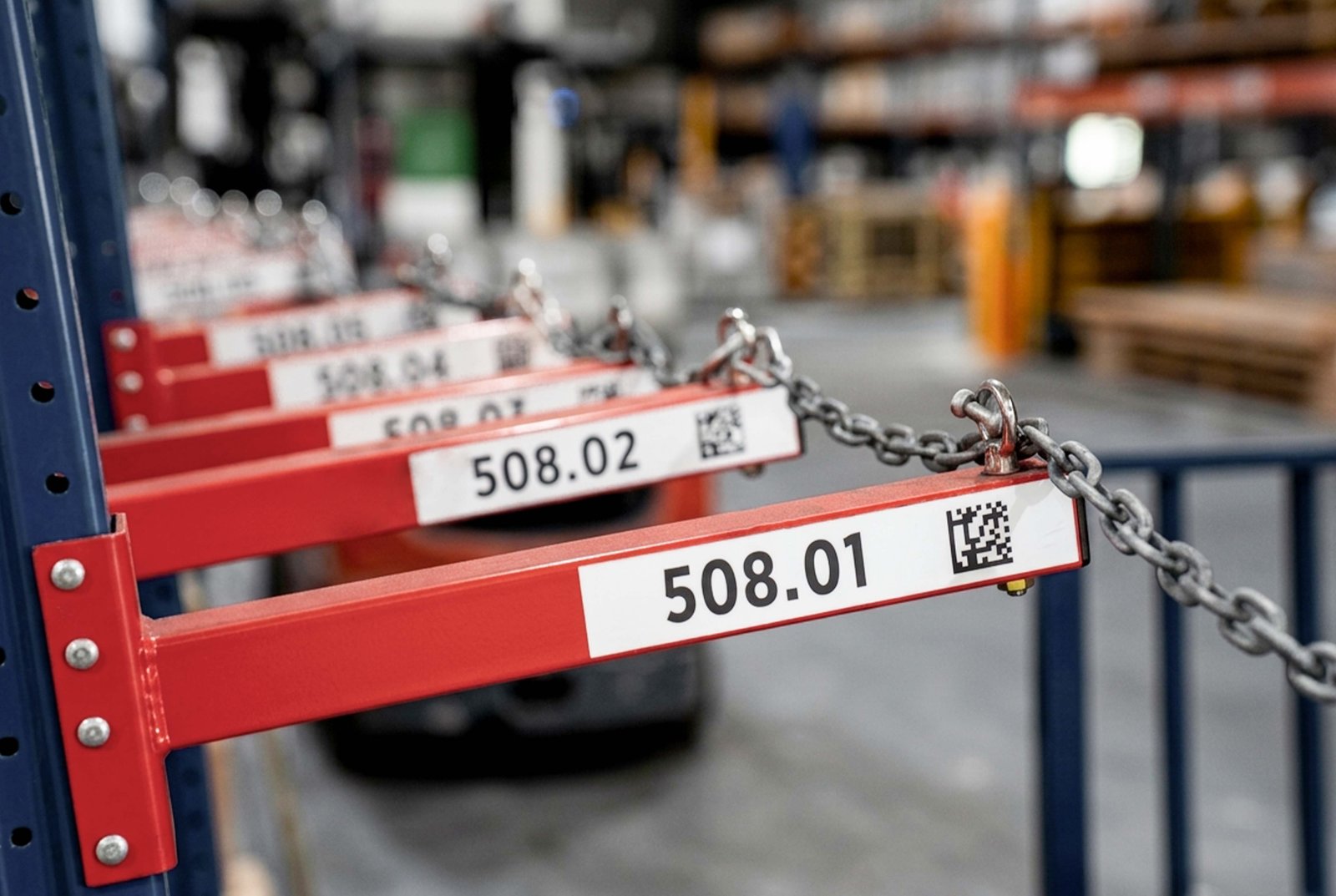
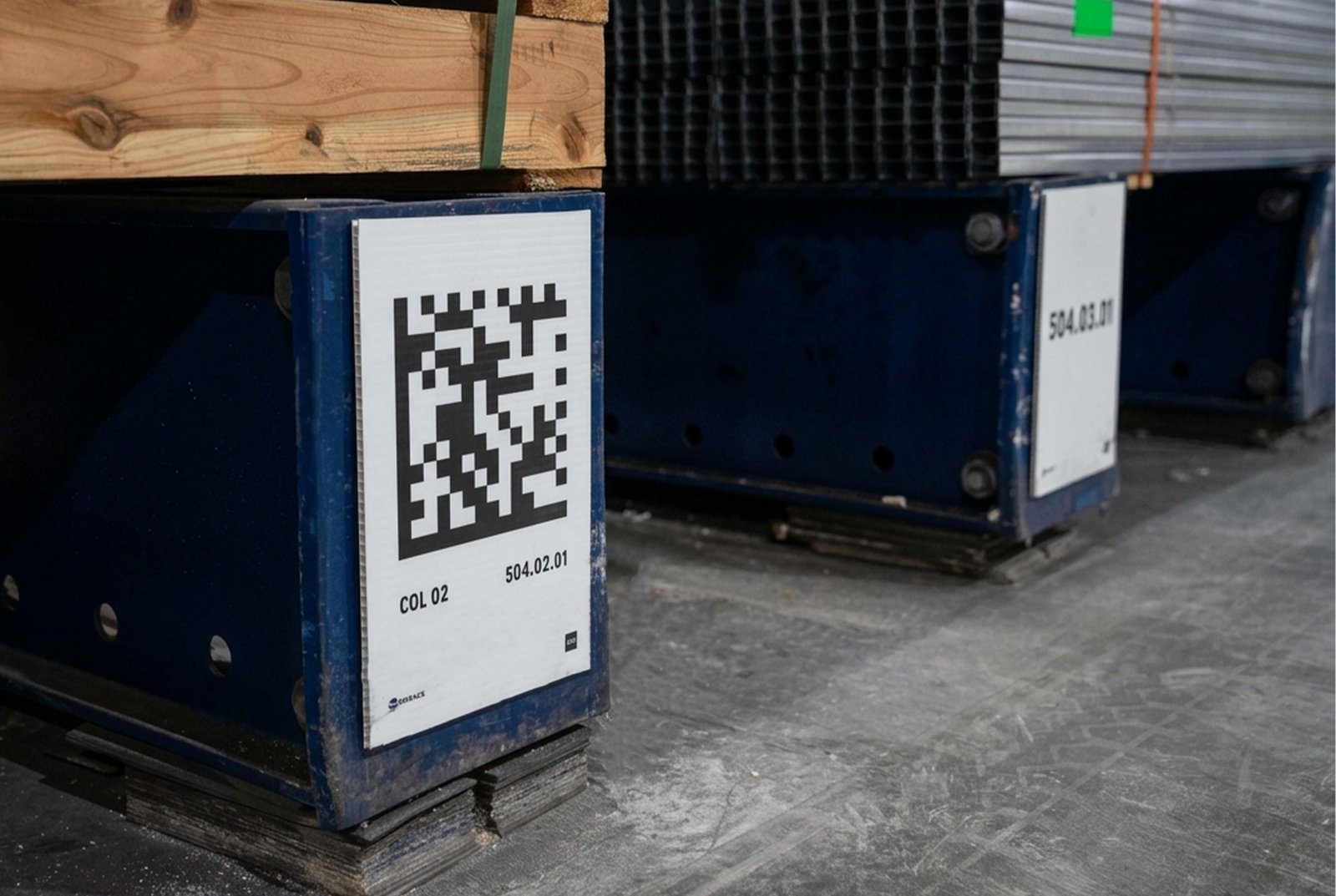
Every label type was drawn up individually, with level identification and direction arrows where operators need them: arrows pointing to the stock on pallet beams, upward arrows on shelving and cantilever arms, and lane-direction arrows on drive-in uprights. Artwork was checked against CSR's own site audit, and updated labels were produced for changes picked up along the way.
Manufacture & Installation
All labels and signage were produced to suit where they'd be fitted, then installed on site by Emrack's own team. Working area by area kept the DC operating throughout, with every label checked against the location plan as it went up.
What We Delivered
All up, close to 1,500 labels and signs went in across the site:
- Pallet racking: around 450 beam location labels, with level identification and arrows pointing to the stock
- Cantilever racking: around 300 arm and base labels
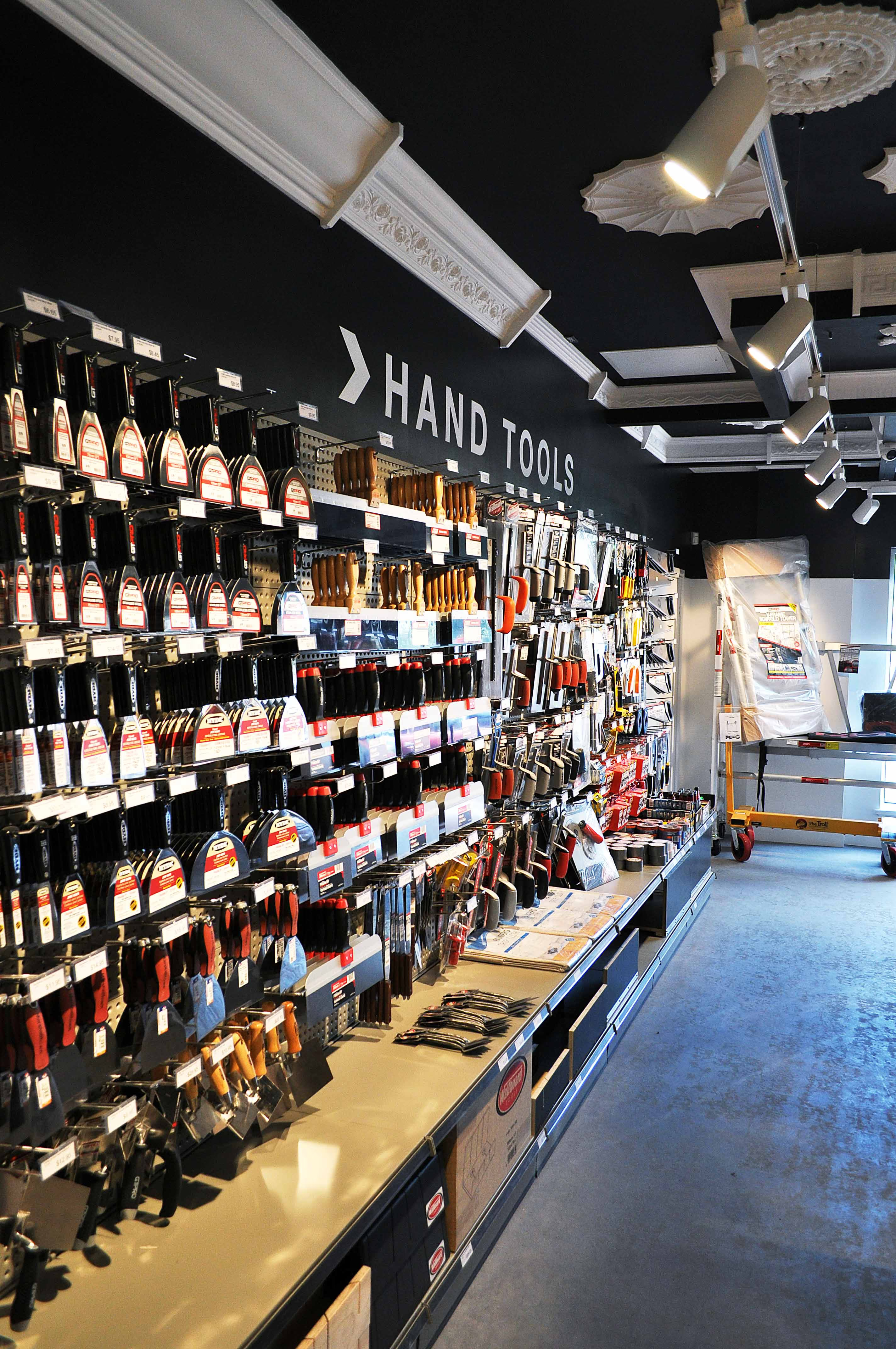
- Shelving: around 230 shelf location labels, including high-level shelves
- A-frame racking: around 200 arm labels
- Drive-in racking: around 50 upright lane labels
- Aisle and site signage: more than 250 hanging aisle signs and wall-mounted signs
Every location can be scanned straight from the label, so put-away, picking and counts are confirmed in the WMS on the spot.
The Right Material for Every Location
Not every label on a site lives the same life, so we matched the material to the job:
- Adhesive decals for pallet beams, shelving and cantilever and A-frame arms — slim enough to sit on the beam face without catching on stock or forks.
- Corflute for drive-in uprights, cantilever bases and wall signs — light, tough and easy to read at forklift height.
- ACM (aluminium composite) panels for the hanging aisle signs — rigid, flat and readable from the end of the aisle.
The Result: Every Location Has an Address
The Yarraville DC now has one location system that reads the same way on the floor as it does on screen.
FASTER PUT-AWAY & PICKING
Operators can head straight to a location, scan it to confirm and move on — no hunting along the run or checking with the leading hand.
BETTER STOCK ACCURACY
With every location labelled to match the WMS, stock is put away where the system says it is, and found where the system says to look.
EASIER STOCKTAKES & ONBOARDING
Clear aisle signs and level labels make cycle counts quicker and help new starters find their way around a big site from day one.
This project shows that good racking identification is more than stickers on steel. It's the link between your racking and your warehouse system — and getting it right across a large, mixed site takes the same planning as the racking itself.
Ready to Put Your Warehouse on the Map?
Whether you're rolling out a new WMS, re-numbering after a re-rack, or just sick of stock going missing, Emrack can plan, produce and fit your racking identification and stock barcoding — on our racking or anyone else's.
CONTACT US


